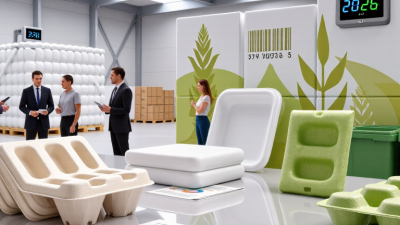





Top 10 Biodegradable Foam Suppliers for Global Buyers
Packaging teams face a practical challenge: reducing plastic waste without risking damaged goods, slower packing, or higher costs. Biodegradable Foam may offer an alternative for cushioning, insulation, and molded protective parts. But the name alone proves little. Materials differ in feedstock, structure, strength, and disposal requirements. Some break down only under specific composting conditions, which may not exist near a buyer’s customers. Details matter.
A foam sample might protect a glass bottle during a short shipment yet fail after repeated handling. Humidity, temperature, storage time, and compression can change performance. Buyers should compare test methods and request current technical documents, not rely on broad environmental claims. This guide introduces ten suppliers serving global markets and highlights factors worth checking, including product range, customization, production capacity, export experience, and documentation. The ranking is a starting point, not a guarantee of fit. Supplier information and product specifications can change, and public claims may not answer every question.
Before requesting quotations, define the packaging job: product weight, shipping route, expected impacts, and end-of-life options. Ask suppliers how they verify biodegradability and which conditions their test results represent. Check whether samples match the quoted specification. Also confirm lead times and minimum order quantities. No single supplier suits every buyer. A lower-impact material can still create waste if it arrives late, performs poorly, or lacks a realistic disposal route. That trade-off deserves a closer look.

Biodegradable Foam: Materials, Properties, and End-of-Life Options
Top 10 Biodegradable Foam Suppliers for Global Buyers
Biodegradable Foam: Materials, Properties, and End-of-Life Options
Biodegradable foam may use starch, cellulose, or compostable polyester blends. Its cushioning depends on density, cell structure, and moisture resistance. A molded starch tray feels light and springy, but can soften when exposed to humidity. Bio-based does not automatically mean biodegradable.
OECD’s Global Plastics Outlook (2022) reports 353 million tonnes of plastic waste in 2019. Only 9% was recycled. This figure covers plastics broadly, not foam specifically. End-of-life options depend on the formulation, local facilities, and contamination. Industrial composting works only when facilities accept the product and conditions match its certification. Landfill or litter can slow breakdown. A frustrating gap remains: product labels and collection access do not always align.
Tips: Ask suppliers for material composition, test results, and disposal instructions. Check whether nearby composting facilities accept the foam; “compostable” does not guarantee home composting. Trial samples with real products and humid storage conditions. Small tests can reveal weak corners before bulk orders.
How to Assess Biodegradable Foam Suppliers for Global Sourcing
Assessing a biodegradable foam supplier starts with the product’s intended use. Ask for test results covering the foam’s exact formulation, thickness, and end-of-life conditions. A compostability claim alone is not enough. Request independent evidence for the specific environment, such as industrial composting, and check whether the tested material matches the product you plan to buy. Test the claim.
Performance matters at the packing bench. Compare cushioning, compression recovery, moisture resistance, and heat tolerance using your own shipping conditions. Request recent batch records and samples from more than one production run. A strong sample is useful; consistent production is better. Ask how the supplier tracks raw materials and handles changes to formulations or manufacturing sites.
End-of-life claims need context. The OECD’s Global Plastics Outlook reports that just 9% of plastic waste was recycled in 2019; that figure covers plastics broadly, not biodegradable foam specifically. European Bioplastics’ 2023 market data estimated global bioplastics production capacity at 2.18 million tonnes, with packaging representing 43.5%. These figures show a growing materials sector, not proof that a particular foam will biodegrade in a buyer’s local waste system. Ask suppliers for clear disposal guidance, documented test methods, and realistic lead times. It can be tempting to rank quotes by price alone. That shortcut deserves a second look when testing, freight, and rejected batches are included.
Top 10 Biodegradable Foam Suppliers for Global Buyers - How to Assess Biodegradable Foam Suppliers for Global Sourcing
This is a comparison of ten supplier capability profiles, not a verified company ranking. Material availability and end-of-life performance vary by formulation and finished product. Confirm claims, certifications, and local disposal options for the exact item being purchased.
| No. | Supplier capability profile | Material and format | Typical maturity | Potential applications | Evidence to request | Key sourcing risks |
|---|---|---|---|---|---|---|
| 1 | Expanded starch packaging producer | Starch-based loose-fill or molded protective pieces; formulations may include other ingredients. | Established niche | Void fill, cushioning, and lightweight protective packaging. | Full formulation or material declaration; test data for the finished product; disposal instructions applicable to the destination market. | Water sensitivity, variable cushioning performance, and additives that may affect biodegradation or compostability claims. |
| 2 | Molded starch cushioning supplier | Starch-rich molded parts formed into custom protective shapes. | Established niche | Custom inserts and protective packaging for non-food products. | Compression and drop-test results for the intended packed product; composition disclosure; substantiation for any compostability claim. | Tooling costs, moisture exposure, and fit or strength differences between molded designs. |
| 3 | PLA-based foam converter | Foam sheet or formed packaging made with polylactic acid (PLA) or PLA blends. | Niche; availability depends on format and region | Protective trays, inserts, and selected disposable packaging formats. | Exact resin and finished-article test reports; certification scope; temperature and service-condition limits. | PLA is not automatically compostable in every product or disposal environment; industrial composting access may be limited. |
| 4 | PHA-based foam developer | Foam or cellular packaging using polyhydroxyalkanoate (PHA) resins or blends. | Emerging; commercial capacity can be limited | Specialty packaging projects requiring a bio-based polymer option. | Finished-product biodegradation data under specified conditions; production capacity, lead times, and batch consistency. | Availability, cost, and performance can vary substantially; do not infer biodegradation in a particular environment from resin type alone. |
| 5 | Mycelium-grown packaging supplier | Mycelium bonded to agricultural substrates and grown into protective forms. | Commercial niche | Protective corner pieces, blocks, and custom cushioning for shipping. | Substrate and binder information; dimensional and compression tests; end-of-life evidence for the finished article. | Part geometry, growth time, moisture behavior, and consistency may affect scalability and unit economics. |
| 6 | Cellulose-fiber cellular packaging supplier | Molded or expanded fiber cushioning; a fiber-based alternative rather than necessarily a polymer foam. | Established for selected packaging formats | Protective inserts, trays, and cushioning components. | Recycled or virgin fiber content; wet-strength additives; recyclability guidance and performance tests. | Water resistance and fit depend on design and additives; confirm whether local collection systems accept the finished item. |
| 7 | Bio-based polyurethane foam supplier | Polyurethane foam incorporating some bio-based feedstock; the polymer may still be non-biodegradable. | Established for selected applications | Cushioning, protective inserts, and other applications requiring flexible foam. | ASTM D6866 or equivalent bio-based-content evidence; safety data; product-specific end-of-life information. | Bio-based content does not establish biodegradability or compostability. Check chemical, fire-performance, and recycling requirements. |
| 8 | Natural-latex foam producer | Foam made with natural rubber latex, often vulcanized and formulated with other ingredients. | Established in selected cushioning markets | Reusable cushioning and specialty protective components. | Natural-rubber content; allergen and chemical disclosures where relevant; end-of-life evidence for the complete formulation. | Natural origin alone does not prove rapid biodegradation; vulcanization and additives can affect end-of-life behavior. |
| 9 | Seaweed- or polysaccharide-based foam developer | Experimental or specialty foams based on materials such as alginate or other polysaccharides. | Emerging | Research, samples, and limited specialty packaging trials. | Independent test reports, formulation details, production-scale evidence, and shelf-life data. | Commercial scale, moisture resistance, and repeatable performance may be unproven for the required application. |
| 10 | Compostable foam compounder or converter | Foam made from a blend of compostable polymers, fillers, and processing additives. | Varies by formulation and converting process | Custom molded or converted packaging when a specified compostability route is required. | Valid certification or test reports covering the exact finished product and thickness; applicable standard and disposal conditions. | Certification of a raw resin may not cover the finished article. Confirm inks, coatings, adhesives, and additives are included in the assessment. |
Global sourcing checks: For industrial compostability, ask whether the finished product has been assessed to a relevant standard such as EN 13432 or ASTM D6400, and verify that the certificate applies to the exact product. ASTM D6866 measures bio-based content; it does not establish biodegradability. Request independent test reports, factory capacity and lead-time data, quality-control procedures, sample approval, packaging specifications, and destination-market compliance documents. Food-contact, chemical, and packaging obligations depend on the product and jurisdiction.
Top 10 Biodegradable Foam Suppliers for International Buyers
International buyers choosing biodegradable foam suppliers need more than an attractive sample. Compare foam type, density, cushioning performance, and documented material composition. Ask whether the product suits your actual use, such as protecting glassware or filling a narrow shipping carton. Details matter.
Request samples in the thickness and shape you plan to order. Test them with realistic packing conditions, including pressure, vibration, and humidity. Samples can mislead. A small test piece may perform differently from a full production run, so ask how suppliers control batch consistency. Clarify minimum order quantities, lead times, export packaging, and which shipping terms are available. Confirm that technical documents and test results match the specific foam grade.
For international buyers, communication is part of product quality. A supplier should explain limitations plainly, respond to technical questions, and provide clear information about disposal conditions. “Biodegradable” can depend on the material and the environment, so avoid relying on a broad label alone. Check whether claims are supported by relevant, independently verifiable documentation for your intended market. Even careful comparisons miss something; a trial order can reveal handling or transit issues that a quotation cannot.
Supplier Comparison: Products, Certifications, and Production Capacity
Comparing ten biodegradable foam suppliers is less about ranking bold claims and more about checking whether each product fits your packaging line. Some offer molded corner guards, while others focus on sheets, loose-fill, or custom inserts. Ask for density, compression recovery, moisture performance, and operating-temperature data. A sample should survive realistic handling, not just look tidy on a desk. Samples help.
Certification claims need careful reading. Ask for current certificates and test reports, then confirm which product grades and manufacturing sites they cover. Compostability is not the same as biodegradation in every environment. Check whether certification applies to industrial or home composting, and whether local facilities accept the material. A logo alone is thin evidence.
Production capacity can change the comparison. Request typical monthly output, minimum order quantity, tooling lead time, and recent on-time delivery figures. Ask how the supplier controls batch variation, such as foam density checks or compression tests. A large stated capacity may not mean your order gets priority. This part is easy to overlook. Record responses in the same format, and note unanswered questions; a polished spreadsheet can still hide practical uncertainty.
Global Buying Factors: Pricing, Shipping, and Regulatory Compliance
When comparing the top 10 biodegradable foam suppliers, look beyond the quoted price. Ask whether the offer includes custom tooling, sample testing, and protective packaging. A low unit cost can become expensive when minimum order quantities exceed actual demand. Request a quote at two or three order volumes, with currency and quote validity clearly stated. Small details matter.
Shipping deserves equal attention. Foam is light, but it can occupy substantial container space; ask for carton dimensions, pallet counts, and estimated shipping volume. Compare the landed cost, including freight, insurance, duties, and delivery to your warehouse. Confirm production lead time separately from transit time, and check how the supplier handles delays or damaged cartons. A spreadsheet can still mislead if its shipping assumptions are vague.
Regulatory evidence should match the destination market and the product’s intended use. Request current test reports, material specifications, and documentation supporting compostability claims. “Biodegradable” alone does not explain where, how quickly, or under what conditions a foam will break down. Check whether claims apply to the finished product, not just one ingredient. Requirements vary by region, so verify them with qualified local advisers before ordering. Paperwork takes time. I would also keep a reserve for retesting; specifications and buyer requirements can change, and that is easy to underestimate.
Related Posts
-
2026 Top Biodegradable Foam Suppliers for Global Buyers
-
How to Choose the Right Foam Packaging for Your Products
-
How to Choose the Right Insulated Packaging for Your Products
-
2026 Best Shipping Styrofoam Options for Global Buyers?
-
China Best Custom Insulated Boxes Manufacturer?
-
How to Optimize Temperature Control with Insulated Shipping Boxes for Perishable Goods