





Why Choose Chocolate Wrapping Machinery for Your Business?

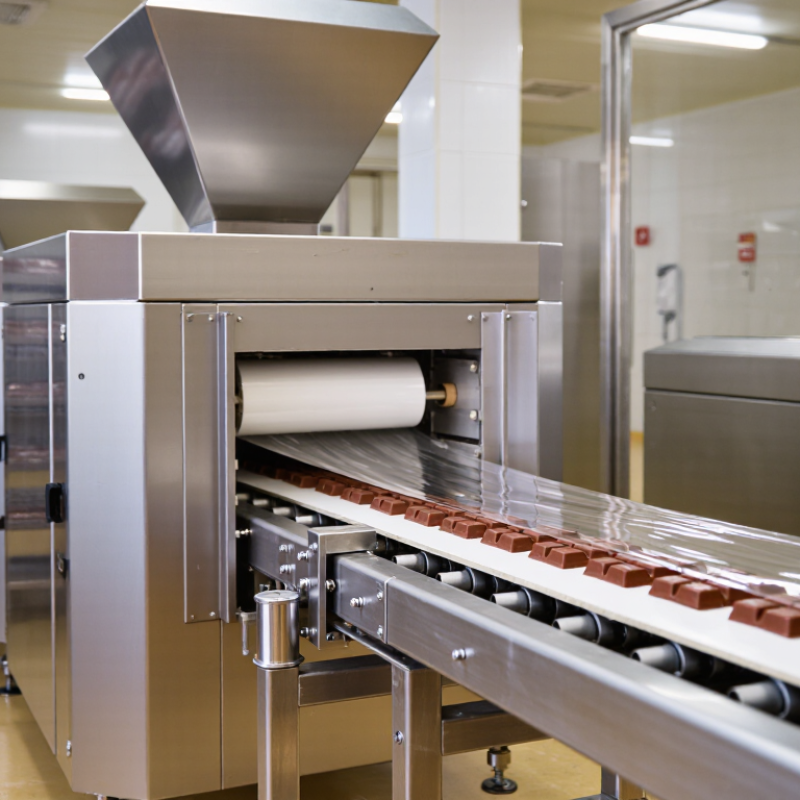
Chocolate manufacturers face a practical challenge: each product must be protected, presented, and packed at a pace that suits production. A chocolate bar moving down a line can soften in a warm room, while loose wrapping may leave its edges exposed. Chocolate Wrapping Machinery helps businesses create more consistent packages, reduce repetitive handwork, and move finished products toward storage or shipping. The right system depends on the chocolate’s shape, wrapper material, output target, and available floor space.

A small confectionery workshop may need a compact machine for seasonal batches. A larger factory may prioritize continuous feeding, quick changeovers, and integration with upstream cooling equipment. These choices affect more than speed. Accurate wrapping can limit material waste and improve shelf presentation, but performance still depends on setup, maintenance, and operator training. No machine solves every packaging problem. That is worth remembering.

Before investing, compare production needs with the machine’s rated capacity instead of relying on headline figures alone. Ask suppliers about product-size ranges, changeover time, service access, and spare-part availability. If possible, test the equipment with actual products and packaging film. A wrapper that runs smoothly with one chocolate may struggle with another. The details matter. Even a modest line can benefit when its constraints are measured honestly. This guide explores how wrapping machinery can support efficiency, product protection, and brand consistency, while highlighting questions to consider before making a purchase.
Why Choose Chocolate Wrapping Machinery for Your Business?

Set Throughput Targets: Chocolate Wrappers Range from 30 to 600 Packs per Minute

Choosing chocolate wrapping machinery starts with a realistic throughput target, not the largest number in a brochure. Chocolate wrappers may handle roughly 30 to 600 packs per minute, depending on the machine and product. A line running at 30 packs per minute may suit small batches or frequent flavor changes. Higher speeds demand steady feeding, accurate product alignment, and reliable sealing. One missed transfer can disrupt the next stage. Speed matters.

Set your target using saleable packs, not theoretical machine cycles. At 300 packs per minute, 18,000 pieces take one ideal hour. Cleaning, film changes, and brief stops reduce actual output. Pack dimensions matter, too. A small chocolate may feed smoothly, while a wider bar needs more spacing and careful film control. Ask for a test using your actual product and wrapping material. Record stable speed, reject rates, and changeover time. Leave some capacity for demand peaks, but avoid paying for speed your team cannot use. A target can look convincing on paper and still be wrong for the line. Recheck it against real shift data after production begins.

Match Wrapper Type to Chocolate Shape, Fold Style, and Pack Material

Chocolate wrapping machinery should match the product, not just the target speed. A flat bar usually suits a flow wrapper, which forms a sealed pack around the piece. Small, rounded chocolates may work better with twist wrapping; delicate pralines often need a gentler folding action. Check how each product sits on the conveyor. A corner that catches or a warm chocolate surface can disrupt neat folds and seals. Small details matter.

Pack material matters just as much. Foil, paper, and heat-sealable films behave differently at the folding head and sealing jaws. Confirm the wrapper can handle the material’s stiffness, thickness, and seal requirements before choosing a machine. The Grand View Research Chocolate Market Size, Share & Trends Analysis Report estimates the global chocolate market at USD 119.39 billion in 2023, indicating a large and varied product category—not one packaging format. For operators, that variety means testing actual products and pack materials, not relying only on a brochure’s speed figure. Run a trial with real pieces. Measure rejects, seal consistency, and changeover time. The first setup may not be the best one. A wrapper that handles several shapes can add flexibility, but frequent adjustments can also slow production.

Why Choose Chocolate Wrapping Machinery for Your Business?

Match the wrapper type to the chocolate’s shape, fold style, and packaging material.

How to read this chart: Ratings show typical format suitability, not measured machine performance. Flat bars commonly suit fold wrapping or flow wrapping; round pieces may suit twist wrapping. Foil, paper, and heat-sealable films require a wrapper designed for the chosen material and fold or seal.

Compare Film Options: Common Flow-Wrap Gauges Range from 20 to 40 μm

Choosing chocolate wrapping machinery means matching the film to the product, line speed, and sealing conditions. Common flow-wrap film gauges range from 20 to 40 μm, but thickness alone does not predict performance. A 20 μm film may suit small, uniform pieces when the machine controls film tension and seals consistently. It uses less material. Still, sharp corners, loose crumbs, or warm chocolate can expose weaknesses. The pack can wrinkle. Test the actual product on the line, because folds and seals behave differently at production speed.

Around 30 μm can offer a useful balance between flexibility and handling strength, though it is not a universal setting. A 40 μm film may better tolerate rough handling, but it can require adjusted sealing temperature, pressure, or dwell time. Check the film structure as well as its gauge; two films of equal thickness may run differently. Watch a real shift, not just a short trial. Seal quality may drift when rolls change, and that detail is easy to miss. A brief test with filled packs can reveal issues that a clean, empty-film run will not.

Check Hygienic Design Against Food-Contact Rules and ISO 22000

Why Choose Chocolate Wrapping Machinery for Your Business?

When choosing chocolate wrapping machinery, look beyond speed and finished-pack appearance. Check whether product-contact surfaces use suitable materials and whether the supplier provides documentation for their intended food-contact use. Requirements vary by market and application, so confirm the rules that apply to your product and packaging. Keep the declarations and cleaning instructions with your equipment records.

Hygiene also depends on what operators can inspect and clean. Look for smooth joints, minimal crevices, and access to areas where chocolate crumbs or cocoa butter may collect. Ask to see how guards open and how cleaning tasks fit into a real shift. Small gaps matter. A shiny surface alone proves little.

ISO 22000 is a food safety management system standard, not a certificate that automatically makes a machine compliant. Its principles can help a site assess hazards, set sanitation controls, and maintain records. Relate the machine’s design and cleaning procedures to your own hazard analysis. One imperfect detail can be missed during a showroom visit, so review drawings, manuals, and maintenance needs with the people who will clean and operate the line.

Why Choose Chocolate Wrapping Machinery for Your Business? — Check Hygienic Design Against Food-Contact Rules and ISO 22000
Evaluation Area What to Check on the Machinery Relevant Rule or Framework Why It Matters to the Business
Food-contact materials Identify every component that directly contacts chocolate or may transfer substances to it under intended or foreseeable use. Request material specifications and applicable compliance documentation. For the EU, Regulation (EC) No 1935/2004 sets general requirements for food-contact materials. Specific measures may also apply, such as Regulation (EU) No 10/2011 for plastic materials and articles. Helps assess whether materials are suitable for the product, process conditions, and destination market.
Manufacturing hygiene Ask how the equipment is designed and manufactured to prevent contamination and how relevant production, handling, and quality controls are documented. In the EU, Regulation (EC) No 2023/2006 establishes good manufacturing practice for materials and articles intended to contact food. Documented controls support consistent procurement and supplier evaluation for food-contact parts.
Cleanability and access Inspect whether product-contact areas are accessible for the intended cleaning method. Look for avoidable product traps, inaccessible joints, and surfaces that are difficult to inspect. ISO 22000:2018 requires a food safety management system; equipment hygiene controls should be considered within the organization’s hazard analysis and prerequisite programs. Better access can make cleaning, inspection, and routine sanitation easier to carry out and verify.
Material selection and condition Check material grades, surface condition, coatings, lubricants, seals, and wear parts against the product, cleaning chemicals, operating temperature, and maintenance plan. Food-contact suitability depends on the applicable market rules and conditions of use; a material name alone does not demonstrate compliance. Helps identify potential corrosion, wear, or transfer risks and clarifies replacement requirements.
Packaging-material handling Review how the machine stores, feeds, and guides wrappers, and how the process protects packaging materials from avoidable contamination before they enclose the chocolate. Food safety controls should consider the full process and relevant packaging materials, not only machine parts that touch the product. Supports a more complete assessment of contamination risks during wrapping and product handling.
Cleaning and maintenance instructions Request written procedures covering cleaning access, approved methods, inspection points, maintenance tasks, and replacement of worn components. ISO 22000:2018 provides requirements for an organization’s food safety management system; it does not prescribe a single machine-cleaning method. Clear instructions help operators apply repeatable procedures and provide useful records for internal verification.
Supplier evidence and scope Ask for a component list identifying food-contact parts, supporting declarations or test information where applicable, and clear limits on intended use. Requirements differ by jurisdiction and material type. In the United States, applicable food-contact substance provisions may be found in relevant parts of Title 21 of the Code of Federal Regulations. Specific, traceable evidence is more useful than a general claim that a machine is “food grade.”
ISO 22000 claims Verify exactly which organization, site, and activities are covered by any claimed ISO 22000 certification, and check its validity with the certification body. ISO 22000:2018 specifies requirements for a food safety management system. It is not, by itself, a product certificate or a hygienic-design certificate for a machine. Prevents confusion between a supplier’s management-system certification and evidence about the machinery itself.
Important: Applicable food-contact requirements depend on the destination market, the materials used, and the intended conditions of use. Confirm regulatory requirements with qualified food-contact compliance personnel before purchase or production.

Assess Payback Using the 85% World-Class OEE Benchmark

Chocolate wrapping machinery can improve output, but its payback depends on measured performance, not brochure speed. Overall equipment effectiveness (OEE) combines availability, performance, and quality. Seiichi Nakajima’s TPM framework is commonly associated with an 85% world-class OEE benchmark. Treat that figure as a reference, not a promise: chocolate format changes, foil jams, cleaning, and handoffs can reduce actual results. That matters.

For a simple payback estimate, consider a line rated at 120 packs per minute, scheduled for 16 hours daily. Its theoretical capacity is 115,200 packs per day. Raising OEE from 60% to 85% could add 28,800 saleable packs daily, if demand and materials support the increase. At an assumed net contribution of $0.02 per additional pack, that equals $576 per operating day, before financing, maintenance, labor, and waste costs. Use your own shift logs and contribution margin; the example is not a forecast. Real output varies.

Tips: Record stops, rejects, and speed losses across several weeks. Compare like-for-like products, then calculate payback using achievable—not ideal—OEE. Don’t overlook short foil stoppages; they add up.

Great Expectations

Great Expectations is more than a tagline, it is an attitude. At Great Northern, customer challenges are met by an undying spirit to doing what others can’t or won’t. It’s in our DNA. And it is what our customers have come to expect with Great Northern.

How can we exceed your expectations?