Why Choose a Wood Humidor Box for Better Storage?
A Wood Humidor Box offers more than attractive presentation. It creates a controlled environment for cigars, protecting aroma, texture, and aging potential. The Premium Cigar Association’s 2023 industry reporting highlights continued consumer interest in premium cigar quality and long-term product care. That trend makes storage performance increasingly important.
Spanish cedar remains a preferred interior wood because it supports moisture regulation and adds a recognizable cedar aroma. However, wood alone does not guarantee reliable storage. The box needs accurate sealing, a calibrated hygrometer, and steady humidity control. Michael Herklots, a cigar educator and former Nat Sherman executive, puts the principle simply: “Consistency matters more than chasing a perfect number.” That advice is practical. Stability usually matters more than impressive specifications.
Research from Grand View Research also connects premiumization with greater demand for specialized cigar accessories. A well-built Wood Humidor Box supports that expectation through durable construction and slower environmental changes. Open the lid, and the difference should feel tangible: a clean cedar scent, resilient wrapper leaves, and no brittle edges. Not every wooden box performs equally well. Some absorb moisture unevenly. Others lose humidity through weak hinges or unfinished joints. Buyers should question dramatic claims and inspect materials carefully. FSC-certified wood, transparent manufacturing information, and independent humidity testing add credibility. The humidor is not magic. It is a storage tool that rewards patience, measurement, and occasional correction.
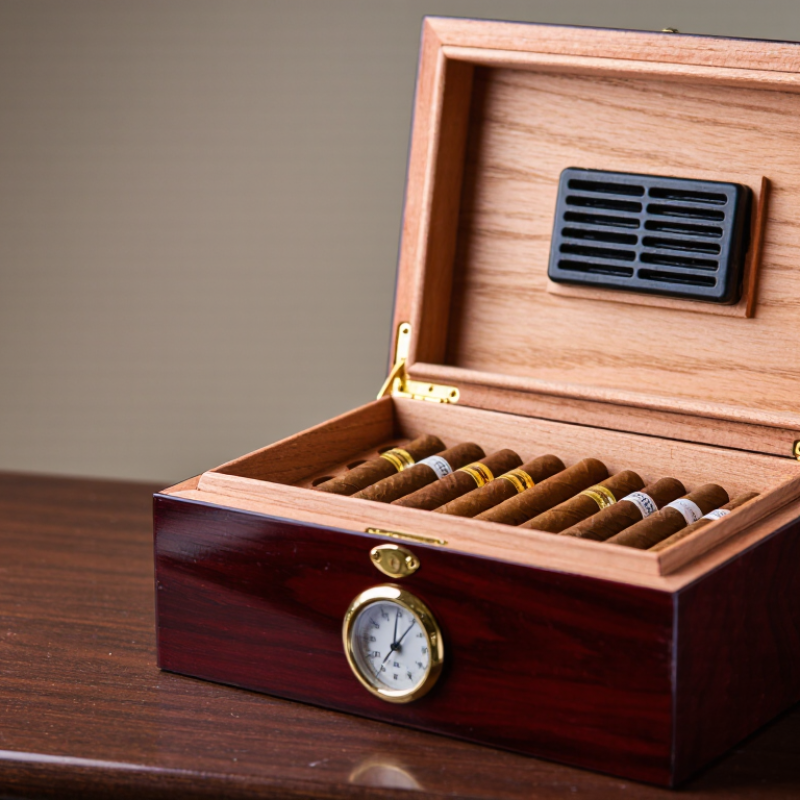
What Is a Wood Humidor Box and How Does It Work?
A wood humidor box is a sealed storage container designed to protect cured tobacco products from drying, cracking, or losing aroma. Its wooden interior helps create a stable microclimate. Spanish cedar is commonly used because it holds moisture well and adds a gentle, recognizable scent.
The box works through balance, not constant wetness. A humidification device releases moisture when the air becomes too dry. A hygrometer shows the relative humidity inside. Many users aim for roughly 65% to 72%, depending on the product and personal preference.
The seal matters greatly. Even excellent wood cannot compensate for a loose lid.
Before storage, the wood usually needs gradual seasoning. This process prepares the interior to hold moisture evenly. Add moisture carefully, then check the reading over several days. It is easy to overcorrect. Excess humidity may encourage mold or create uneven burning. Too little humidity can make the contents brittle.
Not every wooden box performs equally. Thin panels, poor hinges, or an inaccurate hygrometer can weaken storage. Keep the humidor away from sunlight, heaters, and damp walls. Open it briefly when checking contents. Small habits matter. In practice, stable conditions are more valuable than chasing one perfect number.

How Wood Regulates Humidity for Proper Cigar Storage
Why Choose a Wood Humidor Box for Better Storage?
Wood helps stabilize humidity because it is naturally hygroscopic. It absorbs moisture when surrounding air becomes damp. It releases moisture when the air becomes dry. The USDA Forest Products Laboratory’s Wood Handbook, FPL-GTR-282, explains this equilibrium process in detail. At about 70°F and 65% relative humidity, many wood species reach roughly 12% moisture content. This slow exchange creates a gentler environment for cigars.
That buffering effect works best with Spanish cedar or other suitable hardwoods. A stable humidor commonly maintains approximately 65–72% relative humidity and 18–21°C. ASHRAE’s Handbook—Fundamentals also describes how porous materials exchange moisture until balance is reached. A wooden box can soften sudden humidity changes after opening the lid. The cigars are less likely to face abrupt dryness or excessive moisture.
Wood is not magic. Poor seals, direct sunlight, and an oversized humidification device can still cause problems. A digital hygrometer should be checked regularly, preferably at the cigar level. Give the box time to stabilize before adjusting it again. This part is often overlooked. In practice, repeated small checks work better than dramatic corrections. I would also avoid assuming every wooden box performs equally. Thickness, grain, lining quality, and construction details can change humidity behavior considerably.
Why Wood Materials Protect Flavor, Aroma, and Freshness
Why Choose a Wood Humidor Box for Better Storage?
Wood protects flavor, aroma, and freshness through controlled moisture exchange. The USDA Forest Products Laboratory’s Wood Handbook, FPL-GTR-282 (2021), describes wood as hygroscopic. It absorbs and releases moisture as surrounding humidity changes. At about 20°C and 65% relative humidity, many woods reach roughly 12% equilibrium moisture content. That buffering effect can reduce sudden humidity swings inside a storage box. That balance matters.
Spanish cedar and similar aromatic woods also contribute a gentle scent. Their porous structure can help moderate moisture around stored cigars. However, aroma preservation is not automatic. A strong or unconditioned wood smell may overpower delicate flavors. The material should feel dry, clean, and free from chemical odors. The ASHRAE Handbook—Fundamentals (2021) stresses that moisture control depends on temperature, airflow, and enclosure quality, not material alone.
A practical setup needs a reliable hygrometer and a properly fitted lid. Check the reading after opening the box, not only before. Wood may absorb excess moisture slowly, then release it during drier periods. Yet poor sealing can defeat that benefit. The common mistake is treating wood as a complete humidity system. It is only one part. Storage conditions still require observation, adjustment, and occasional cleaning. Even professional recommendations deserve testing in your own environment.
Key Features to Consider When Choosing a Wood Humidor
A wood humidor box can protect humidity-sensitive goods when its construction is carefully chosen. Solid, well-seasoned wood offers better stability than thin panels or decorative veneers. The interior lining should be clean, smooth, and free from strong chemical odors. Spanish cedar is commonly valued for moisture regulation, but the wood must be properly dried before use.
Seal matters most. Check the corners, lid alignment, and hinge movement before buying. A gentle paper test can reveal gaps around the lid. If the paper slides out easily, humidity may escape too quickly. A reliable hygrometer is also essential, preferably one that can be calibrated. Digital models are convenient, while analog models need closer checking.
Capacity should match the amount being stored. Excess empty space can make humidity control less predictable. A removable divider may improve airflow and organization. The humidification system should distribute moisture evenly without touching the stored items. I once focused too much on attractive wood grain and overlooked a weak seal. That mistake taught me to inspect function before appearance. Temperature also matters; a cool, stable room is safer than a sunny shelf. Do not rush the setup. Allow the wood to stabilize gradually, then monitor humidity for several days. Even experienced users should recheck readings, because instruments can drift over time.
How to Maintain a Wood Humidor for Long-Term Performance
Why Choose a Wood Humidor Box for Better Storage?
A wood humidor can buffer short humidity changes, protecting sensitive contents from rapid drying or swelling. The USDA Forest Products Laboratory’s Wood Handbook, FPL-GTR-282 (2021), explains that wood exchanges moisture with surrounding air. Therefore, unstable humidity can gradually distort panels, seals, and internal fittings.
Maintenance starts with measurement. Keep the humidor away from sunlight, heaters, vents, and damp walls. A practical storage range is usually 65–70% relative humidity, but stability matters more than chasing one number. Check the hygrometer weekly. ASTM E104-20 provides saturated-salt methods for checking humidity sensors, including sodium chloride near 75.3% RH at 25°C. Do not trust an untested display.
Before regular use, condition unfinished interior wood gradually with a suitable humidification method. Avoid soaking the panels. Standing liquid may create stains, swelling, or mold. The 2023 ASHRAE Handbook warns that persistently high humidity increases moisture-related damage risks, while the U.S. Environmental Protection Agency generally recommends 30–50% RH for ordinary indoor spaces. A humidor requires a different target, so its internal climate must be monitored separately.
Inspect the gasket and hinges every month. Wipe condensation immediately with a clean, dry cloth. Never use scented cleaners or oily polish inside. If readings remain high, remove the humidification source briefly and ventilate the empty box. This is where maintenance becomes imperfect: wooden boxes respond slowly, and one adjustment may take several days to show. Record readings, room temperature, and corrections in a simple log.