





7 Tips for Choosing the Right Beverage Can End

Choosing the right Beverage Can End is a small decision with a visible effect. It influences how a drink opens, pours, stays protected, and runs through a filling line. A lid that looks right on a sample can behave differently at production speed. Fit comes first.

Ermal Fraze, inventor of the pull-tab can end, helped make convenient opening a practical part of beverage packaging. A modern selection guide should not present an unverified line as his exact words. A fair paraphrase of the design lesson is: “An opening should feel easy, while its engineering stays dependable.” That balance remains useful. A smooth tab lift matters, but so do seam integrity, score performance, liner compatibility, and resistance to handling damage.

The seven tips ahead consider the product, can diameter, end style, opening size, material, filling conditions, and supplier quality controls. For example, a highly carbonated drink may need different performance checks from a still beverage. A tab should lift without excessive force, and the opening should pour cleanly without sharp edges or awkward splashing. Small details matter.

Specifications help, but they do not replace trials. Test filled cans under realistic storage and line conditions, and review results with the can and end supplier. One limitation is easy to overlook: a technically sound end may still feel wrong to the person holding the can. The right Beverage Can End is the one that meets measurable requirements and works naturally in everyday use.
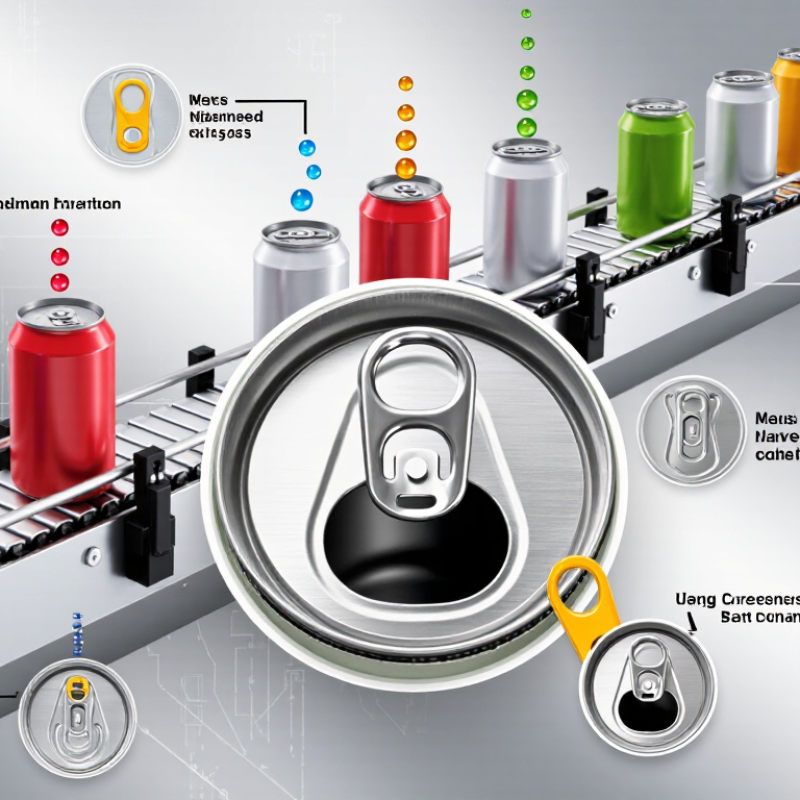
7 Tips for Choosing the Right Beverage Can End

Decode End-Size Codes: A 202 End Has a Nominal 2⅛-Inch Diameter

A 202 end has a nominal diameter of 2⅛ inches. In this three-digit sizing code, “20” indicates 2 inches, while the final “2” adds two sixteenths. It is a useful starting point, not a measurement of every edge or feature. Actual dimensions can vary within manufacturing tolerances, so check the supplier’s drawing before ordering.

Tip: Confirm the end and can-body specifications together. Compare the stated diameter, curl, and seam details, then check that the closing equipment is set up for that combination. A caliper can help check a sample, but measure at the same points each time. Small differences matter.

Tip: Request a sample and inspect the fit before committing to a full production run. Look for uneven seating or seam issues, and keep the approved drawing with the order records. The code gets you close, but it does not answer every compatibility question. That part is easy to overlook.

Match End and Body Alloys: 5182 Aluminum Ends Pair with 3004 Bodies

A beverage can works as a matched system, not as two interchangeable aluminum parts. The body is commonly made from 3004 sheet, while the end uses stronger 5182 alloy. The Aluminum Association’s International Alloy Designations and Chemical Composition Limits for Wrought Aluminum lists 5182 with 4.0–5.0% magnesium. For 3004, it lists 0.8–1.3% magnesium and 1.0–1.5% manganese. The difference matters.

In production, 3004 is suited to drawing and wall ironing, which shape a thin body from a flat blank. The end must keep its form through scoring, forming, and opening. Its higher magnesium content supports the strength needed for those features. A good match helps engineers balance light weight with resistance to handling and internal pressure. Not magic, just material design.

Alloy selection still needs validation. Check temper, sheet thickness, coating, and seam performance with the actual production setup; chemistry ranges alone cannot predict every result. ASTM International’s B209 specification provides requirements for aluminum-alloy sheet and plate, but a specification is not a substitute for line trials. The detail is easy to overlook. A small change in forming conditions can affect the finished end and seam.

7 Tips for Choosing the Right Beverage Can End - Match End and Body Alloys: 5182 Aluminum Ends Pair with 3004 Bodies

Tip Selection dimension 5182 aluminum end 3004 aluminum body Practical takeaway
1 Match alloy to component function Commonly used for can ends, where strength and resistance to pressure-related deformation are important. Commonly used for drawn and ironed can bodies, where formability and strength after processing are important. The alloys serve different manufacturing and performance needs; they are not interchangeable by default.
2 Compare principal alloying elements Magnesium is the principal alloying element; standard composition limits are approximately 4.0–5.0% Mg and 0.20–0.50% Mn. Manganese and magnesium are principal alloying elements; standard composition limits are approximately 1.0–1.5% Mn and 0.8–1.3% Mg. These composition ranges help explain the alloys’ different strength and forming characteristics. Confirm limits against the applicable material specification.
3 Check temper and mechanical requirements End stock is supplied in tempers selected for end forming and service requirements. Body stock is supplied in tempers selected for drawing, ironing, and final can performance. Specify alloy, temper, thickness, and required mechanical properties together; values vary with product form and processing.
4 Account for forming operations The material must support end conversion, including forming features such as the panel, countersink, and rivet area. The material must withstand cup drawing and wall ironing without unacceptable tearing or thinning. Validate each stock in the actual tooling and process; alloy designation alone does not guarantee line performance.
5 Evaluate corrosion and coating compatibility End performance depends on the alloy, coating or lacquer system, beverage exposure, and closure design. Body performance also depends on internal and external coatings, beverage chemistry, and processing conditions. Test the complete coated package with the intended product; alloy choice alone cannot establish corrosion resistance.
6 Confirm joining and dimensional fit End dimensions and curl must be compatible with the body flange and seaming specifications. Body flange geometry and dimensions must support a consistent double seam with the selected end. Check seam dimensions and performance on production-representative samples rather than relying on nominal alloy pairing.
7 Verify specifications and quality controls Review the applicable alloy and temper specification, thickness tolerances, surface condition, and lot documentation. Review the applicable alloy and temper specification, gauge consistency, surface condition, and forming-related quality data. Use current supplier certificates and validate the end-and-body combination against the can design and process requirements.

Note: Composition figures are typical specification limits in weight percent and are provided for general comparison. Applicable standards, product form, temper, and customer specifications may differ.

Choose Tab and Aperture Designs for Product Viscosity and Pouring Needs

Tip: Match the aperture to how the beverage flows. Thin drinks usually pour easily through standard openings, while thicker mixtures may need a wider pour area. Watch for slow flow, pulsing, or residue around the opening. Small details matter. A larger aperture can help, but it may also increase splashing or make controlled sipping harder.

Tip: Choose the tab style for the intended pour. A stay-on tab keeps the panel attached after opening, while the tab’s shape and leverage affect how cleanly the aperture opens. For drinks that foam, a controlled opening can reduce sudden surges. Check that the tab is comfortable to lift and does not leave a sharp edge near the drinking area.

Tip: Test with the actual product, chilled and at room temperature. Viscosity can change with temperature, so a design that pours well when warm may feel sluggish when cold. Try several opening sizes and tab positions, then observe flow, drips, and how much liquid remains near the rim. A quick bench test helps, though it cannot replace a production-line check. I would not assume one sample tells the whole story.

Inspect Double-Seam Geometry: Five Metal Layers Form the Standard Closure

A beverage can’s double seam is a mechanical lock, not simply a folded rim. In a cross-section, the end’s cover hook curls around the can body’s flange, while the body hook folds back over it. Together, the interlocked parts form five metal layers: typically two from the end and three from the body. Seam dimensions vary with can design, so use the approved specification for that can rather than relying on a generic measurement.

Inspect the seam’s width, thickness, overlap, and tightness with suitable measuring tools. A cutaway can reveal whether the hooks engage evenly and whether wrinkles or gaps interrupt the closure. Compare measurements across several points around the rim; one neat-looking section does not prove the entire seam is sound. Small defects matter. Visual checks alone can miss problems, so record measurements and follow a consistent inspection procedure.

Tips: Examine a clean cross-section; measure seam width; check thickness at multiple points; look for loose hooks; note wrinkles or sharp edges; compare readings with the can’s specification; repeat any doubtful measurement. It is tempting to trust a smooth appearance, but appearance is only one clue. A careful, repeatable check gives a more dependable picture of seam quality.

Weigh Recyclability: U.S. Aluminum Beverage-Can Recycling Reached 43% in 2023

Recyclability should be part of choosing a beverage can end, not an afterthought. The U.S. aluminum beverage-can recycling rate was 43% in 2023. That figure is sobering, but it does not mean the remaining cans all went to landfill. Collection access, sorting, and reporting methods affect what the rate captures. A well-designed end cannot fix every gap in the recycling system. It can, however, avoid making recovery harder.

Check that the end is compatible with the can body and standard recycling streams. Keep it attached during use, and consider how its shape and opening feature affect sorting and processing. Small details matter. A sharp edge, loose component, or confusing disposal instruction can undermine an otherwise recyclable package. Ask suppliers for material specifications and evidence supporting recyclability claims; don’t rely on a broad “recyclable” label alone. Then review the package in the markets where it will actually be sold, because local collection rules vary. I would be cautious about treating one national percentage as a forecast for every community. The number is useful, but it leaves questions. Who collected the cans, and how much material was ultimately recovered?

U.S. Aluminum Beverage-Can Recycling Rate (2023)

In 2023, 43% of aluminum beverage cans in the U.S. were recycled. Considering recyclability when choosing a can end can help support more recyclable packaging choices.

Source: The Aluminum Association, 2023 U.S. aluminum beverage-can recycling rate.

Article Source:

Great Expectations

Great Expectations is more than a tagline, it is an attitude. At Great Northern, customer challenges are met by an undying spirit to doing what others can’t or won’t. It’s in our DNA. And it is what our customers have come to expect with Great Northern.

How can we exceed your expectations?