How to Choose Biodegradable Cosmetic Packaging?
Choosing Biodegradable Cosmetic Packaging starts with a practical question: what happens to the package after the last drop is gone? The answer depends on the material, the conditions needed for it to break down, and whether suitable processing facilities are available. A package labeled biodegradable may not decompose quickly in a home compost bin, garden soil, or landfill. Looks can mislead.
For skincare brands, the choice also has to protect the product. A lightweight cream, a watery serum, and an oil-based balm place different demands on containers, closures, and liners. Test for leaks, product compatibility, shelf life, and damage during shipping before committing to a material. Ask suppliers for clear information about composition, testing methods, and the conditions required for biodegradation. Vague claims deserve careful follow-up.
Compare the full package, not only the bottle. A biodegradable body may still include a conventional pump, label, adhesive, or inner coating that complicates disposal. Check whether each component can be separated, and give customers plain instructions they can actually follow. Small details matter.
There is no perfect option for every product or market. I would be cautious about treating “biodegradable” as a complete sustainability solution; it can sound reassuring while leaving the end-of-life path unclear. This guide explores material choices, performance checks, supplier questions, and practical trade-offs. The goal is a package that protects the formula and makes a credible, understandable claim.
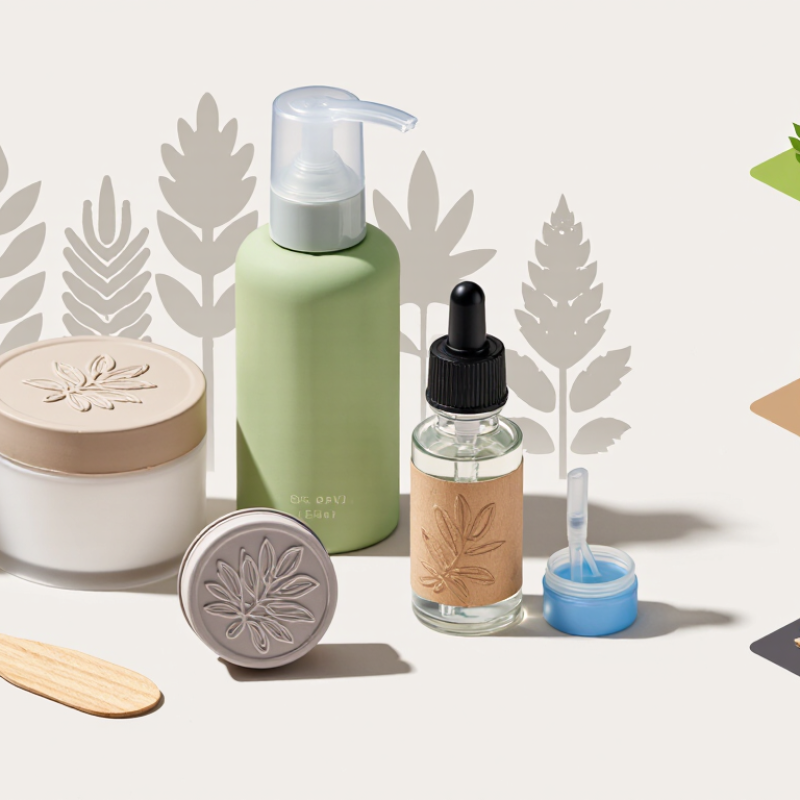
Define Your Product and Packaging Requirements
Start with the product, not the package shape. Is it a watery toner, an oil-rich balm, or a thick cream? Note its pH, oils, alcohol content, fragrance, and active ingredients. These details can affect swelling, odor, leakage, or barrier performance. Also define how customers will use it: one-handed pumps, repeated opening, travel, or a single-use sample. Small details matter.
Set practical targets for fill volume, shelf life, shipping, and cost. A light lotion may work in a paper-based tube, while a fluid serum may need stronger moisture protection. Biodegradable materials are not interchangeable, and some require specific composting conditions. Check supplier test data and ask what disposal route the claim assumes. Claims should match evidence and local collection options.
Test the complete package with the real formula. Fill samples, store them upright and on their sides, and check for leaks, softening, color changes, and pump clogging. Run transport trials if parcels may face heat or rough handling. Test before scaling. One uncomfortable question is whether customers can dispose of the package as intended. If the answer is unclear, the design may need revision; a greener material alone does not solve a poor product-packaging fit.
Compare Biodegradable Packaging Materials
Biodegradable does not mean disposable anywhere. Compare materials by the conditions they need, not by the label alone. PLA can make clear, rigid jars, but many grades require industrial composting and may soften with heat. PHA options vary: some are designed to biodegrade in more environments, yet performance depends on the specific formulation and conditions. Starch blends suit flexible packs, but moisture can weaken them. Cellulose films feel paper-like; coatings may complicate composting or recycling.
The trade-offs show up in real packaging details. A cream jar must resist oils, while a thin sachet needs a reliable moisture barrier. Pumps, labels, and mixed-material closures can also disrupt disposal, even when the main container is compostable. Ask suppliers for test methods, certification scope, and time-and-temperature conditions. “Biodegradable” alone is not enough. European Bioplastics’ 2024 market update reports that packaging represented about 45% of global bioplastics production capacity, underscoring how varied these applications are.
Check local waste services before choosing. OECD’s Global Plastics Outlook estimated that only 9% of plastic waste was recycled globally in 2019; compostable packaging needs its own collection and processing route. That sounds tidy. It isn’t always available. Compare barrier performance, shelf life, and end-of-life access using the same product specifications, then test the pack with actual formula residue. A material that performs well in a lab may not fit the local disposal system.
How to Choose Biodegradable Cosmetic Packaging?
Compare materials carefully: biodegradation depends on the finished product and disposal conditions.
Industrial compostability test benchmarks (EN 13432): packaging must meet a biodegradation threshold of at least 90% within six months. In the disintegration test, after 12 weeks, no more than 10% of the original dry mass may remain on a 2 mm sieve. The chart shows these maximum test periods in days.
Material choice: paper and molded fiber can suit dry products; cellulose films can work for some lightweight applications; PLA and PHA are options for certain molded parts. Their performance and compostability vary with coatings, additives, thickness, and product design. Check certification for the complete package and confirm that suitable industrial composting is available locally. “Biodegradable” does not mean it will break down quickly in nature or in home compost.
Check Certifications and Disposal Conditions
A biodegradable claim is only useful when its conditions match your local waste system. Check the package or supplier documentation for independent certification against a recognized compostability standard, such as EN 13432, ASTM D6400, or ISO 17088. These standards assess factors including biodegradation and disintegration under specified conditions. A certificate for industrial composting does not mean the item will break down in a backyard pile, soil, or seawater. Not always.
Disposal access matters. Industrial composting usually requires controlled heat, moisture, and processing time; many facilities do not accept cosmetic packaging, especially containers with mixed materials, pumps, or metal springs. Ask your local facility before placing a package in a compost bin. The OECD’s Global Plastics Outlook reports that only 9% of plastic waste was recycled globally in 2019, while 50% was landfilled. This is a useful reminder that a material’s theoretical end-of-life pathway may not exist nearby. I find labels easy to trust, but they can leave out the most practical detail: where the item can actually go.
Tip: Request the certificate, confirm which exact component it covers, and check the facility’s accepted-material list. A compostable bottle and a non-compostable cap need separate instructions. When evidence is unclear, don’t assume “biodegradable” means curbside compostable.
Test Packaging Performance and Product Compatibility
Biodegradable packaging should be tested with the finished formula, not selected by material claims alone. A facial oil may soften a coating, while a water-based lotion may stress seals or encourage microbial growth. Fill test containers with production-like batches, then track leakage, weight, color, odor, viscosity, and pH during storage. Include temperature changes and transport simulation; a jar that survives a shelf test may still crack after a cold delivery. Small details matter.
European Bioplastics’ 2023 market update reported that packaging accounted for about
0.94 million tonnes, or 43%, of global bioplastics production capacity.
That figure shows the material’s growing role, not proof that every package suits every product. Ask suppliers for documented test conditions, and confirm compostability claims apply to the specific material and disposal environment. A neat prototype can still mislead. I would not rely on appearance alone.
Run compatibility tests in the intended pack, including cap liners, pumps, and printed areas. Record results at set intervals, and compare them with samples in an inert control container. Check for swelling, paneling, seal failure, and changes in dispensing force. Repeat tests across more than one batch; variability can hide in natural-fiber blends. If performance falls short, adjust the formula or pack design, then retest. The awkward part is that no single test predicts every real-world condition.
Evaluate Suppliers, Costs, and Environmental Impact
How to Choose Biodegradable Cosmetic Packaging?
Compare suppliers on evidence, not eco-friendly wording alone. Request independent test reports for the exact bottle, cap, label, and ink combination. Check what conditions the material needs to biodegrade; industrial composting is not the same as a garden compost heap. Ask suppliers about minimum order quantities, tooling fees, delivery times, and price at several order volumes. A lower unit price may hide expensive tooling or high shipping costs. Small details matter: a pump, foil seal, or product residue can complicate disposal.
Environmental impact deserves equal scrutiny. The OECD’s Global Plastics Outlook reports that plastics generated 1.8 billion tonnes of greenhouse gas emissions in 2019, about 3.4% of global emissions; most came from production and conversion.
That figure covers plastics broadly, not cosmetic packaging alone. Still, it shows why material choice and manufacturing energy belong in supplier discussions. Request life-cycle data, recycled or renewable feedstock details, and evidence that the package protects the formula. If a lighter pack leaks or causes product waste, the greener claim may weaken. I would not treat a “biodegradable” label as proof of lower impact.
Tips: Get comparable quotes using the same package specifications. Ask where the item can actually be processed, and keep the supplier’s test documents on file. Then trial the pack with your real formula. A little mess in testing can prevent a larger one later.
 920.831.2285