





Top Thermal Sticker Label Manufacturers in China

Choosing a Thermal Sticker Label manufacturer in China involves more than comparing prices. A label may look clean on a sample roll, then fade after weeks in a warm warehouse. Small details matter: face stock, adhesive strength, roll width, core size, and print response. Get those details in writing.

This guide introduces manufacturers and the capabilities buyers should examine. Look for clear product specifications, consistent sample quality, and answers from staff who understand label use—not only sales terms. Ask how labels perform on your actual packaging. Test barcode readability, adhesion on the intended surface, and resistance to heat or moisture where relevant. A few printed samples can reveal more than a polished catalogue.

There is no universal best supplier. Some buyers need fast production and standard sizes; others need custom shapes, stronger adhesive, or reliable color matching. Verify production capacity and quality checks directly, and compare quotations using the same specifications. A low price can become costly if rolls vary or labels lift at the corners. Still, samples do not guarantee every future batch. That part deserves a second look. The aim here is a practical shortlist, not a promise of perfection.
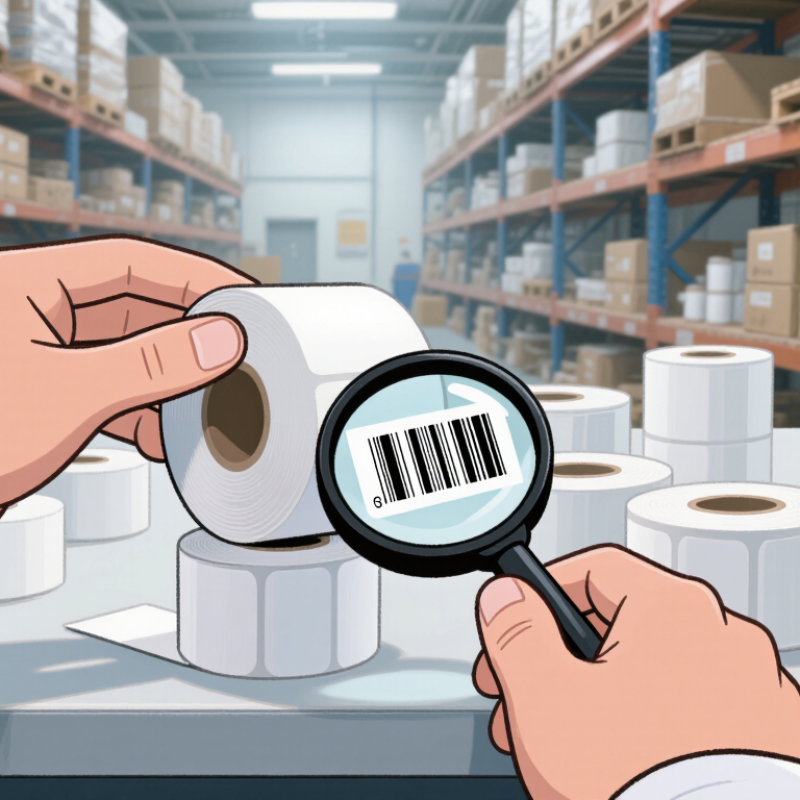
Top Thermal Sticker Label Manufacturers in China

Understanding China's Thermal Sticker Label Manufacturing Industry

China’s thermal sticker label industry combines paper converting, coating, printing, and finishing under one supply chain. Manufacturers typically source facestock and adhesive, apply a heat-sensitive coating, then slit large rolls into narrower widths. Some factories also make fanfold labels for packing lines.

Material choice matters.

Direct thermal paper darkens when exposed to a heated printhead, so coating consistency affects image clarity and storage life. A buyer should compare samples using the actual printer, ribbon settings, and surface conditions. Small differences show up fast.

Humidity can change results.

Production checks may include roll width, core diameter, adhesive tack, coating appearance, and print density. For labels used on cartons, cold-storage packs, or weighing scales, the adhesive must suit the surface and temperature range. A label that works on clean cardboard may lift from a chilled plastic container. Specifications should state these conditions clearly.

China’s manufacturing base offers a range of order sizes and converting options, but capability varies between plants. Ask for a material data sheet, a sample roll, and clear tolerances before placing a large order. It is easy to focus on price. Less obvious details, such as roll-edge alignment or liner release, can affect machine uptime. I would still test a production sample, not just a showroom sheet.

How Thermal Sticker Labels Are Made and Quality-Controlled

Thermal sticker labels begin with a paper face stock, a heat-sensitive coating, pressure-sensitive adhesive, and a release liner. During production, each layer is matched to the label’s intended use. The coating must react clearly to a printer’s heated printhead, while the adhesive must hold on the target surface. Coating is applied evenly, then dried and bonded under controlled conditions. The material is slit into rolls, where clean edges and consistent winding help prevent jams. Small defects matter.

Quality control checks more than appearance. Technicians can test print darkness, image sharpness, adhesive tack, roll width, and label spacing. Sample labels are printed at set temperatures and speeds, then inspected for gaps, streaks, or faint text. Adhesion tests on cardboard and plastic reveal whether labels lift at the corners. Some batches also undergo heat and humidity exposure to check image stability. Results depend on the actual printer and storage conditions, so one test cannot represent every workplace.

A capable manufacturer records measurements by batch and keeps samples for comparison. Still, quality checks have limits: a label that performs well in a factory may behave differently after months in a hot warehouse. That detail is easy to overlook. Clear specifications and realistic testing help buyers judge whether a thermal label suits their application.

Leading Thermal Sticker Label Manufacturers in China

Leading thermal sticker label manufacturers in China serve logistics, retail, food packaging, and warehouse operations. Compare suppliers by coating uniformity, adhesive performance, roll consistency, and print clarity—not price alone. Smithers’ 2023 study, The Future of Labels and Release Liners to 2028, valued the global labels market at approximately US$50.9 billion in 2023, with further growth forecast by 2028. This wider market trend supports demand for reliable label materials, but it does not prove that every factory meets the same standard.

Request samples made with your intended face stock, adhesive, and liner. Print small barcodes, then check scanning under ordinary handling and storage conditions. Ask for measurable specifications, such as roll width tolerance and core size, and confirm how the supplier handles coating defects. Small details matter. A label that curls on a cold carton can slow packing, even when its printed surface looks excellent. Factory audits and batch records can help verify consistency; a polished sample alone cannot.

Tips: Test samples on your own printer and packaging. Check adhesion after exposure to heat, moisture, and friction. Keep one concern in mind: these checks take time, and a brief trial may not reveal every production issue. Test before scaling.

Comparing Manufacturers by Products, Capacity, and Certifications

Thermal sticker label manufacturers differ most in material range, production scale, and quality controls. Some focus on direct thermal paper for shipping labels, while others offer thermal-transfer stock, removable adhesives, or moisture-resistant facestocks. Ask for samples in the actual printer and application. A label that feeds smoothly on a desk may wrinkle on a fast packaging line.

Capacity is more than a stated monthly output. Compare available press widths, finishing equipment, typical order quantities, and lead times for repeat runs. Ask how the factory handles a sudden increase in demand, and whether it can keep color, roll diameter, and core size consistent. These details matter. A large factory is not automatically the best fit for a small, varied order. I would treat unverified capacity figures cautiously; public figures can be hard to compare.

Certifications can help assess management systems and sourcing claims, but check their scope and validity. An ISO 9001 certificate, for example, concerns a quality management system, not a guarantee that every label suits food contact or freezer use. Request current documents, technical data sheets, and batch inspection records. Compare adhesive performance on your cartons at low and room temperatures. It takes extra time. Still, that test can reveal a mismatch before thousands of rolls arrive.

Top Thermal Sticker Label Manufacturers in China - Comparing Manufacturers by Products, Capacity, and Certifications

Anonymous supplier profiles below describe common product specializations, not verified details about individual manufacturers. Production capacity and certifications vary by factory and should be confirmed with current documents and facility-specific evidence.

Anonymous supplier profile Typical products Capacity comparison Certifications and evidence to check Best suited for
Direct thermal specialist Direct thermal paper labels for shipping, logistics, retail, and other applications. Direct thermal printing uses heat-sensitive label material and does not require a thermal-transfer ribbon. Ask for annual saleable output in square metres, supported by production records. Also compare roll dimensions, minimum order quantity, lead time, and available coating options. Verify any ISO 9001 certificate against the issuing body, validity dates, and certified site. Request technical data sheets and test results for the offered material grade. Buyers seeking paper-based labels for compatible direct thermal printers and clearly specified use conditions.
Thermal-transfer label converter Paper or film labels designed for thermal-transfer printing, which uses a ribbon to transfer an image onto the label. Adhesive, face stock, and ribbon compatibility should be specified for the application. Compare verified output by material type and finished area, plus slitting and die-cutting capability. Ask for sample runs at the required label size and roll configuration. Check the scope and site listed on any quality-management certificate. Request material specifications and application-specific test evidence rather than relying on a general certificate alone. Applications that require ribbon-based printing or a choice of paper and film face stocks.
Linerless label producer Linerless self-adhesive labels supplied without a separate release liner. Confirm printer compatibility, roll specifications, adhesive performance, and the release surface requirements. Request output figures for linerless material separately from standard labels. Validate them with production records, sample rolls, and a trial on the intended printer or applicator. Confirm certificates apply to the actual manufacturing site and product scope. For any claimed environmental or food-contact suitability, request supporting documentation for the specific product. Buyers whose equipment and workflow are designed to use linerless rolls.
Custom die-cut label converter Custom label shapes, sizes, roll formats, and adhesive constructions. Confirm whether the offered label stock is direct thermal or thermal transfer; these print methods are not interchangeable. Compare tooling availability, sample and production lead times, minimum order quantity, and documented output for the requested construction. Capacity figures should be stated in a consistent unit. Check current certificate copies, issuing body, covered address, validity, and scope. If paper sourcing is relevant, verify any FSC claim through valid chain-of-custody documentation. Projects needing non-standard dimensions, shapes, materials, or roll formats.

Capacity comparison note: There is no single public capacity figure that reliably compares all label converters. For a fair comparison, request the same measure from each supplier—such as annual saleable output in square metres for the specified product—and ask for dated supporting records. ISO 9001 and ISO 14001 relate to management systems; confirm the certificate scope and covered facility before treating either as evidence for a particular product.

How to Select a Chinese Thermal Sticker Label Supplier

Choosing a Chinese thermal sticker label supplier starts with matching the label to its actual job. A warehouse shipping label faces abrasion, moisture, and fast printer speeds; a shelf tag may need clean edges and stable color. Ask about material and adhesive options, not just the unit price. Small detail, big impact. Thermal paper, coating, and adhesive all affect scan clarity and storage life. Check printer width, core size, and print method before requesting a quote.

Request samples made to the proposed specifications and test them on your own printer. Look for dark, even bars, clean cuts, and labels that peel without tearing. Expose samples to expected heat, light, or condensation. Results can vary. A supplier should explain coating, roll tolerances, adhesive performance, and inspection records in plain terms. If answers remain vague, treat that as a risk. There is no single best adhesive; results can change with cartons, cold rooms, and application timing.

Compare lead times, minimum order quantities, packaging, and defect-handling procedures. Confirm that specifications will remain consistent between trial and repeat orders; a good sample alone proves little. Ask how batches are traced and quality records are retained. A factory audit or independent inspection can add confidence, but neither replaces real-use testing. No supplier is perfect. Put acceptance criteria in writing, including dimensions, roll count, and allowable variation.

Top Thermal Sticker Label Manufacturers in China: How to Select a Supplier

Compare a supplier’s available roll-core sizes with your printer’s specifications before placing an order. The chart shows common core sizes in inches, converted to millimeters; confirm the exact dimensions with the supplier, as available options vary by product.

Great Expectations

Great Expectations is more than a tagline, it is an attitude. At Great Northern, customer challenges are met by an undying spirit to doing what others can’t or won’t. It’s in our DNA. And it is what our customers have come to expect with Great Northern.

How can we exceed your expectations?